
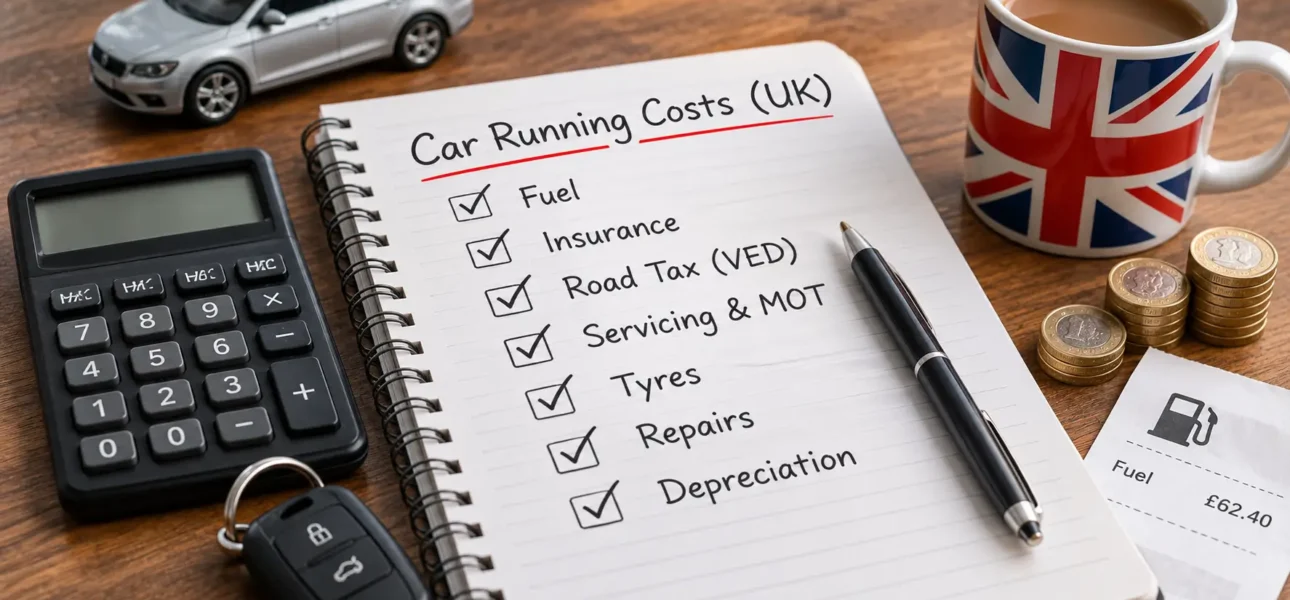
Buying a car is only the beginning of the expense. Once you own a vehicle, you’ll need to budget for fuel or electricity, insurance, Vehicle Excise Duty, servicing, repairs and other ongoing costs. The total cost of running a car in the UK varies considerably depending on what you drive, where you live, how far you travel and your driving history.
A small petrol hatchback used for occasional journeys will usually have different running costs from a large SUV covering thousands of motorway miles every month. Here’s how to calculate your likely expenses and identify opportunities to save money.
At a glance
- Running costs depend on your car, mileage, location and driving history.
- Fuel, insurance and tax are the biggest regular costs.
- Depreciation is often the largest hidden cost of a newer car.
- Set money aside each month for repairs and breakdowns.
What Are the Main Costs of Running a Car?
The main expenses fall into two categories: regular costs and occasional costs. Regular costs include insurance, fuel, tax and finance payments where applicable.
Occasional costs include tyres, servicing, MOT tests, unexpected repairs and breakdown recovery. Depreciation is another significant expense, although it doesn’t normally appear as a monthly bill.
The three types of running cost
- Fuel or charging
- Insurance
- Car tax (VED)
- Finance payments
- Servicing
- MOT test
- Tyres
- Repairs and breakdowns
- Depreciation
- Parking and permits
- Tolls and clean air zones
- Home charging set-up
1. Fuel Costs
For petrol and diesel vehicles, fuel is often one of the largest regular expenses.
Your fuel costs depend on three main factors:
- Annual mileage.
- Fuel consumption.
- Price per litre.
For example, imagine a car that travels 8,000 miles annually and achieves 45 miles per gallon using UK imperial gallons. That equates to approximately 808 litres of fuel per year. At an illustrative price of £1.45 per litre, annual fuel spending would be around £1,172.
This is only a calculation example, not a current national fuel-price estimate. Your actual costs will change with driving conditions, vehicle efficiency and pump prices.
Worked example: annual fuel cost
Swap in your own mileage, fuel economy and pump price to estimate your costs. This is an illustration, not a national average.
2. Car Insurance
Car insurance is a legal requirement for vehicles used on the road. Premiums vary widely depending on your age, driving experience, claims history, postcode, vehicle and how the car is used.
Comparing quotes at renewal, choosing a sensible voluntary excess, adding an experienced named driver where appropriate and building a no-claims discount can all help reduce the cost.
3. Vehicle Excise Duty (Car Tax)
Most cars must be taxed to be used or kept on a public road. For cars first registered from 1 April 2017, the first-year rate depends on CO2 emissions. After that, a standard rate applies, which rose to £200 a year from 1 April 2026.
Cars with a list price over £40,000 pay an additional expensive car supplement for five years from the second year of tax. Electric cars have paid car tax since April 2025, and the supplement threshold for zero-emission cars has been raised to £50,000. Always check the current rate for your vehicle on GOV.UK.
Key figures for 2026
Check GOV.UK for the rates that apply to your vehicle.
4. Servicing and Maintenance
Regular servicing helps keep your car reliable and can prevent more expensive problems later. Costs depend on the vehicle, the type of service and the garage. Budget for routine items such as oil, filters, brake pads, wiper blades and bulbs.
5. MOT Test
Most cars need an annual MOT once they are three years old (four years in Northern Ireland). The maximum official MOT fee for a car in Great Britain is £54.85, although some garages charge less. Any repairs needed to pass are an additional cost.
6. Tyres
Tyres wear gradually and must have at least 1.6mm of tread across the central three-quarters of the tread. Larger wheels and performance tyres usually cost more to replace. Checking tyre pressures regularly can improve fuel economy and help tyres last longer.
7. Repairs and Breakdowns
Unexpected repairs are difficult to predict, so it is sensible to set money aside each month. If you don’t have breakdown cover, a one-off recovery can still be arranged when needed. Our guide to breaking down without breakdown cover explains your options.
8. Depreciation
Depreciation is the loss in value of your car over time. It is often the biggest cost of owning a newer car, even though you don’t pay it as a bill. It becomes real when you sell or part-exchange the vehicle.
9. Parking, Charging and Other Costs
Depending on where you live and drive, you may also pay for residents’ parking permits, workplace parking, tolls, clean air zone or congestion charges, and home or public charging for an electric car.
How to Work Out Your Own Running Costs
- List your fixed annual costs: insurance, tax, MOT, servicing and breakdown cover.
- Estimate your fuel or charging costs from your annual mileage and your car’s efficiency.
- Add an allowance for tyres, repairs and wear items.
- Include finance payments and an estimate of depreciation.
- Divide the total by 12 for a monthly figure, or by your annual mileage for a cost per mile.
Ways to Reduce the Cost of Running a Car
Small changes can add up to big savings over a year.
Ways to cut your running costs
- Compare insurance quotes at every renewal.
- Drive smoothly and keep tyres at the right pressure to save fuel.
- Remove roof boxes and extra weight when you don't need them.
- Keep up with servicing to avoid bigger repair bills.
- Consider a more efficient car when it's time to change.
24/7 vehicle recovery
Broken down? We can help.
Tell us where the vehicle is and where it needs to go. A licensed local operator will confirm the price and get help to you, day or night.
Written By

Jason Morgan
Jason writes about breakdown recovery and roadside assistance for our site. His guides help drivers understand common vehicle problems, what to do when a breakdown happens and what to expect during recovery. Away from writing, Jason is a keen Formula 1 fan who enjoys following the racing, team tactics and latest developments throughout the season.