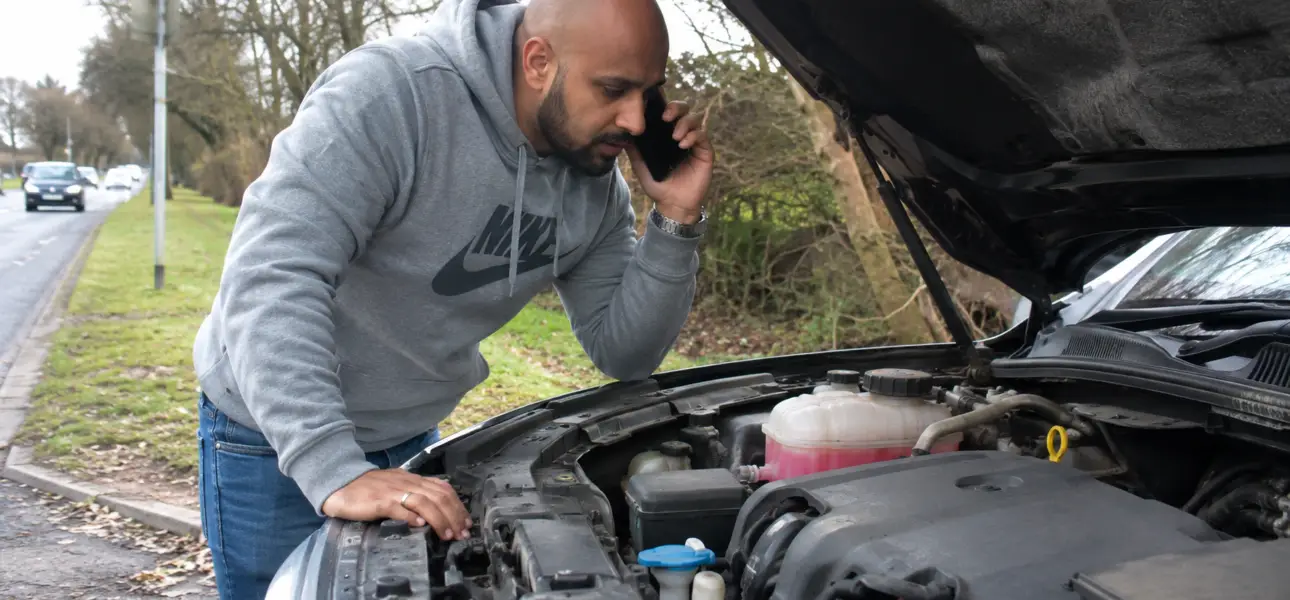
An overheating engine is a warning you shouldn’t ignore. Whether you’re stuck in traffic, travelling on the motorway or driving around town, continuing with an overheating car can cause serious engine damage. In some cases, the problem may be a minor cooling-system fault. In others, it could indicate a failed water pump, coolant leak or damaged head gasket.
Understanding the warning signs and knowing when to stop can help prevent a difficult situation becoming an expensive repair.
At a glance
- A temperature gauge in the red or a warning light means stop as soon as it's safe.
- Never open the coolant cap while the engine is hot.
- Wait at least 30 minutes for the engine to cool before checking anything.
- Common causes are low coolant, a failed fan, thermostat or water pump.
What Are the Signs of a Car Overheating?
Modern cars use warning lights, dashboard messages and temperature gauges to alert drivers when the engine becomes too hot.
Common symptoms include:
- The temperature gauge rising into the red.
- An engine temperature warning light.
- Steam appearing from under the bonnet.
- A sweet smell associated with leaking coolant.
- Reduced engine performance.
- Unusual noises from the engine compartment.
-
The heater blowing cold air despite the engine being hot.
Not every overheating problem produces visible steam. A warning message alone is enough reason to take the situation seriously.
Reading your temperature gauge
Gauges vary between cars. If you see a warning light or message, treat it as overheating.
What to Do If Your Car Starts Overheating
1. Switch Off the Air Conditioning
Air conditioning can place additional load on the engine. Turning it off may help reduce that load while you find somewhere safe to stop.
2. Find a Safe Place to Pull Over
Indicate and pull over as soon as it is safe to do so. On a motorway, leave at the next exit or use an emergency area if you can. Switch on your hazard warning lights once you have stopped.
Continuing to drive with an overheating engine can quickly turn a minor fault into serious engine damage.
3. Switch Off the Engine and Let It Cool
Once you have stopped safely, switch off the engine. Wait at least 30 minutes before opening the bonnet, and longer if there is steam. The cooling system is pressurised and can spray scalding coolant if opened while hot.
Danger: hot coolant
The cooling system is under pressure. Opening the cap on a hot engine can spray scalding coolant. Always let the engine cool fully first.
4. Never Open a Hot Coolant Cap
Do not remove the radiator or coolant reservoir cap while the engine is hot. Once the engine has fully cooled, you can check the coolant level against the minimum and maximum marks on the reservoir.
5. Top Up Coolant If Appropriate
If the level is low and the engine is cold, top up with the coolant type recommended in your handbook. In an emergency, plain water may get you a short distance, but the coolant should be corrected as soon as possible. If the level drops again quickly, there is probably a leak.
6. Decide Whether It Is Safe to Continue
If the temperature gauge rises again, warning lights stay on, steam returns or you can see coolant leaking, don’t continue your journey. Driving an overheating engine risks a damaged head gasket, warped cylinder head or complete engine failure.
What Causes a Car to Overheat?
- Low coolant: often caused by a leak from a hose, the radiator, the water pump or the head gasket.
- Faulty thermostat: a thermostat stuck closed stops coolant flowing to the radiator.
- Failed water pump: the pump circulates coolant around the engine. If it fails, the engine heats up quickly.
- Radiator fan problem: the fan is essential in slow traffic. A failed fan or fan relay often causes overheating in queues rather than at speed.
- Blocked radiator: internal deposits or debris on the outside reduce cooling.
- Head gasket failure: can push combustion gases into the cooling system, causing overheating, white exhaust smoke and coolant loss.
How to Help Prevent Overheating
A few simple habits can help you avoid an overheating engine.
Prevention checklist
- Check the coolant level regularly when the engine is cold.
- Use the coolant type in your handbook and replace it at the recommended intervals.
- Look for leaks or wet patches under the car.
- Watch the temperature gauge in heavy traffic and hot weather.
- Have the cooling system checked if the heater blows cold or the fan runs constantly.
When to Call for Recovery
If your car keeps overheating, has lost a lot of coolant or shows signs of head gasket damage, it is safer to have it recovered than to drive it. Our guide to breaking down without breakdown cover explains your options if you don’t have a policy.
24/7 vehicle recovery
Engine overheating? Don't risk it.
Tell us where the vehicle is and where it needs to go. A licensed local operator will confirm the price and get help to you, day or night.
Written By

Jason Morgan
Jason writes about breakdown recovery and roadside assistance for our site. His guides help drivers understand common vehicle problems, what to do when a breakdown happens and what to expect during recovery. Away from writing, Jason is a keen Formula 1 fan who enjoys following the racing, team tactics and latest developments throughout the season.