
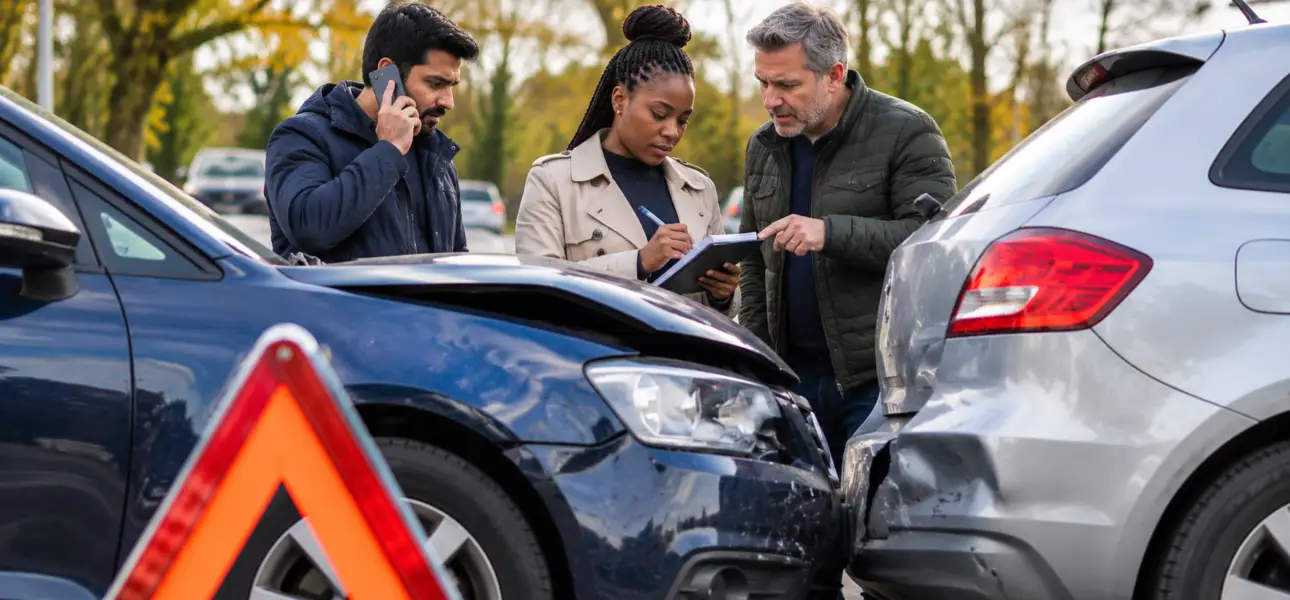
Being involved in a car accident can be frightening, whether it’s a minor collision in a car park or a serious incident on a busy road. Knowing what to do immediately afterwards can help protect everyone involved, meet your legal responsibilities and make the insurance process easier.
This guide explains the practical steps to take after a road traffic accident in the UK.
At a glance
- If anyone is hurt or in danger, call 999 straight away.
- You must stop and exchange details when the law requires it.
- If you can't exchange details, report to the police within 24 hours.
- Tell your insurer as soon as possible, even if you don't claim.
What to do at the scene
- Step 1Stop safelyHazard lights on
- Step 2Check for injuriesCall 999 if needed
- Step 3Exchange detailsNames, reg, insurer
- Step 4Record evidencePhotos and notes
- Step 5ReportPolice and insurer
1. Stop Your Vehicle Safely
If you’re involved in a collision, you must stop where the legal reporting duties apply. Switch off your engine when appropriate, apply the parking brake and turn on your hazard warning lights.
If the vehicle can be moved safely and doing so is appropriate, consider moving it away from traffic. Do not move a vehicle if doing so could create further danger or interfere with emergency services.
2. Check for Injuries
Check yourself, your passengers and others involved. Call 999 if anyone is seriously injured, there is immediate danger or emergency services are needed. Give the operator your location, the number of vehicles involved and any known injuries.
Do not move a seriously injured person unless remaining in place presents an immediate danger. Follow the emergency operator’s instructions.
Call 999 if
anyone is seriously injured, a vehicle is blocking a busy road, there is a risk of fire, or a driver appears to be under the influence of drink or drugs.
3. Make the Scene Safe
Switch on your hazard warning lights and, if it is safe, get yourself and passengers out of the vehicles and away from traffic, ideally behind a barrier. Don’t smoke near the vehicles. Don’t place a warning triangle on a motorway or where doing so puts you in danger.
4. Exchange Details
Under UK law, if anyone is injured, or another vehicle, property or certain animals are damaged, drivers involved must stop and give their name and address, the vehicle owner’s name and address and the vehicle registration number to anyone with reasonable grounds for asking. If anyone is injured, you must also produce your insurance details if asked.
Stay calm and avoid admitting fault or blaming anyone at the scene. Let the insurers deal with liability.
Details to collect
- Other driver's name, address and phone number
- Vehicle owner's details, if different
- Registration numbers of all vehicles involved
- The other driver's insurance company
- Make, model and colour of each vehicle
- Names and contact details of any witnesses
5. Report the Accident to the Police If Required
If you don’t exchange details at the scene, or if anyone is injured and you couldn’t produce your insurance details, you must report the accident to the police as soon as reasonably possible and in any case within 24 hours. Call 999 in an emergency, or 101 to report a non-emergency incident.
If you suspect the other driver is uninsured, has left the scene or was under the influence of drink or drugs, report this to the police.
6. Record Evidence
If it is safe, take photographs of:
- The position of the vehicles before they are moved.
- Damage to all vehicles and property.
- Road markings, signs, traffic lights and weather conditions.
- Number plates.
Write down the time, date and location as soon as you can, along with what happened while it is fresh in your mind. Dashcam footage can also be helpful, so save it before it is overwritten.
7. Tell Your Insurer
Contact your insurance company as soon as possible, even if you don’t plan to make a claim. Most policies require you to report any accident. Give them the details and evidence you collected and follow their advice about repairs and recovery.
8. Arrange Recovery If the Car Can't Be Driven
Don’t drive a damaged vehicle if lights, steering, brakes, tyres or wheels have been affected, or if fluids are leaking. Your insurer may arrange recovery, or you can arrange it yourself. Tell the recovery operator where the vehicle is and where it needs to be taken, such as home, a garage or a bodyshop.
Our accident recovery service can help move vehicles that aren’t safe to drive.
9. Look After Yourself
Some injuries, such as whiplash, may not be obvious straight away. Seek medical advice if you feel pain or discomfort in the hours or days after an accident. Accidents can also be upsetting, so give yourself time before getting back behind the wheel.
24/7 vehicle recovery
Car can't be driven after an accident?
Tell us where the vehicle is and where it needs to go. A licensed local operator will confirm the price and get help to you, day or night.
Written By

Jason Morgan
Jason writes about breakdown recovery and roadside assistance for our site. His guides help drivers understand common vehicle problems, what to do when a breakdown happens and what to expect during recovery. Away from writing, Jason is a keen Formula 1 fan who enjoys following the racing, team tactics and latest developments throughout the season.